
Pocket Option Review 2025: Scam or Legit? Features & Fees Explained
What Is Pocket Option?
Pocket Option is an online trading platform launched in 2017 that focuses on short‑term options trading, forex, crypto pairs, and CFDs. It is known for fast trade execution, a simple interface, and a low entry barrier for beginners. The platform attracts traders who want quick market exposure without complex setups.
Is Pocket Option Legit or a Scam in 2025?
Pocket Option operates under Gembell Limited, registered in the Marshall Islands. This means it is not regulated by major financial authorities such as the FCA, ASIC, or CySEC.
This does not automatically make it a scam, but it does place the platform in a high‑risk category. Traders should understand that offshore brokers offer fewer protections and limited dispute resolution options.
Despite this, Pocket Option has:
- A long operational history (8+ years)
- Millions of active users
- A functioning platform with consistent payouts
These factors suggest it is not a scam, but it is not a low‑risk broker either.
Key Features of Pocket Option
Pocket Option includes several tools designed to make trading accessible:
- Social trading: Copy trades from experienced users.
- Demo account: $10,000 virtual balance for practice.
- Short‑term options: Expiry times from 5 seconds to several hours.
- Market variety: Forex, crypto, commodities, stocks, and indices.
- Bonuses and promo codes: Available but come with conditions.
Trading Platform and Tools
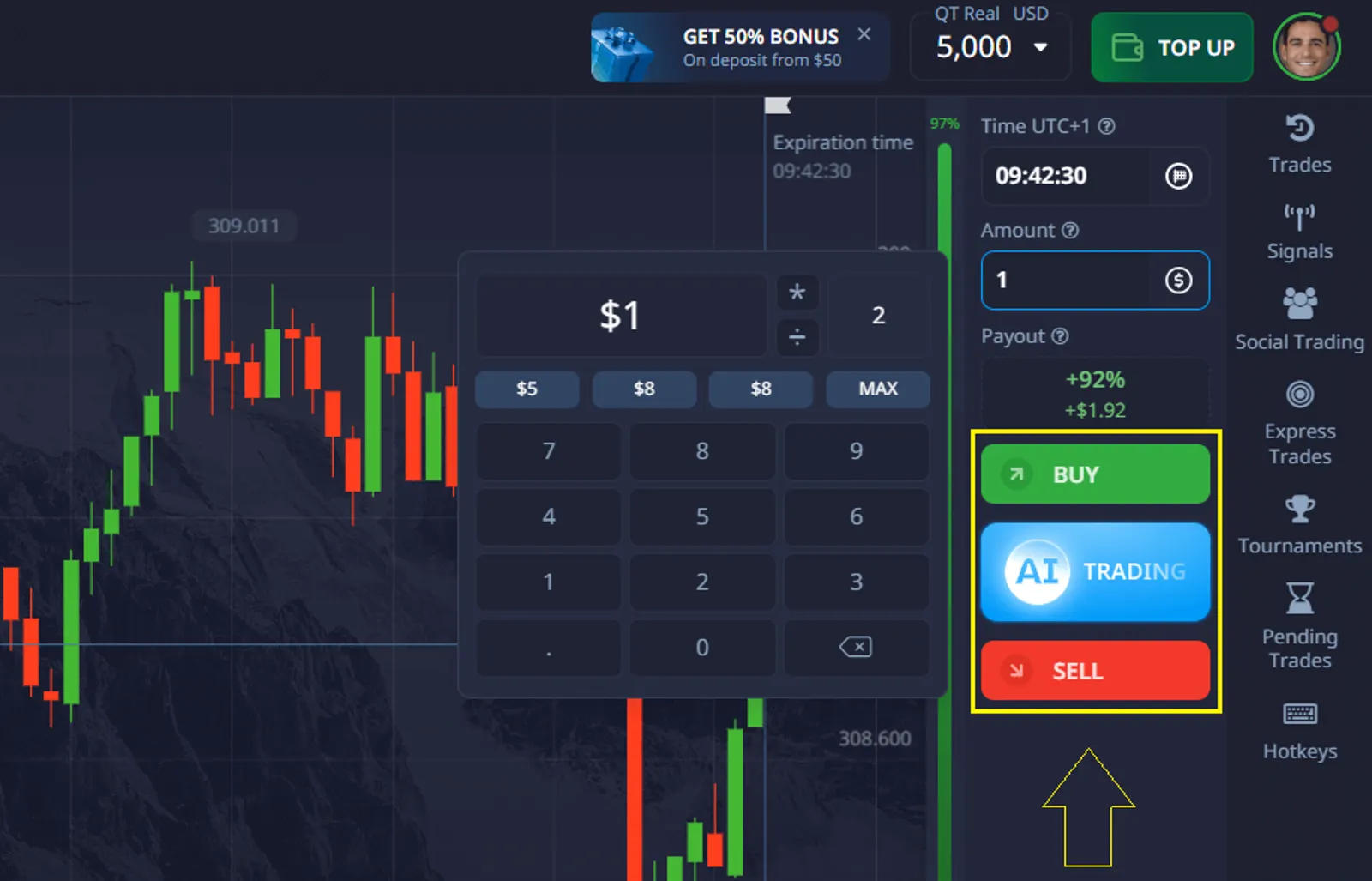
The platform is web‑based and mobile‑friendly. It includes:
- Real‑time charts with multiple timeframes
- Technical indicators such as RSI, MACD, and Bollinger Bands
- One‑click trading
- Trade history and performance tracking
- Customizable interface
The platform is built for speed and simplicity, making it suitable for beginners but less advanced than professional trading terminals like MetaTrader.
Account Types and Minimum Deposit
Pocket Option keeps its account structure simple:
- Demo Account: Free, no registration required
- Live Account: Minimum deposit of $50
- Pro Account: Higher deposit requirements, lower spreads, and additional perks
There are no complicated tiers, which helps new traders get started quickly.
Fees, Spreads, and Payouts
Pocket Option does not charge traditional trading fees. Instead, costs are built into spreads and payout percentages.
- Payouts: Up to 92% on some assets
- Spreads: Vary by asset and market conditions
- Withdrawal fees: None from Pocket Option, but payment providers may charge
- Inactivity fee: Applies after long periods of no trading
The platform is transparent about costs, but traders should always check payout rates before opening a position.
Deposit and Withdrawal Methods
Pocket Option supports a wide range of payment options:
- Bank cards
- E‑wallets (Skrill, Neteller, Perfect Money)
- Cryptocurrencies (BTC, ETH, USDT, etc.)
- Local payment methods depending on region
Withdrawals are usually processed within 1–3 business days. Crypto withdrawals tend to be the fastest.
Pros and Cons
Pros
- Low minimum deposit
- Fast trade execution
- Wide range of assets
- Social trading and demo account
- Crypto‑friendly
Cons
- Offshore regulation
- High‑risk trading products
- Bonuses come with strict conditions
- Not suitable for long‑term investing
Who Should Use Pocket Option?
Pocket Option is best for:
- Traders who prefer short‑term strategies
- Beginners who want a simple interface
- Users who want to trade with small deposits
- Crypto traders looking for fast deposits and withdrawals
It is not ideal for long‑term investors, professional traders, or anyone who requires strong regulatory protection.
Final Verdict – Is Pocket Option Worth It in 2025?
Pocket Option is a legitimate but high‑risk trading platform. It offers fast execution, a clean interface, and flexible payment options. However, its offshore status means traders must accept higher risk and fewer protections.
If you understand the risks and want a simple, fast trading environment, Pocket Option can be a practical choice. If you prefer strong regulation and long‑term investing tools, you may want to consider alternatives.